
CARQUEJA IN THE DAILY LIFE OF VÁRZEA DE CALDE
Multidisciplinary Exhibition
By Ana Margarida Ferreira, Liliana Silva, and Luís Costa
Linen Museum of Várzea de Calde (Viseu, Portugal)
May 11 to August 31, 2025
Opening: May 11 at 3:00 p.m.
An exhibition curated by Binaural Nodar in collaboration with the Municipality of Viseu, the Civil Parish Council of Calde, the Cultural and Recreational Association of Várzea de Calde, the Ethnographic Group of Várzea de Calde, the Polytechnic Institute of Viseu, the ID+ and LiDA research centers, and the European network Tramontana, funded by the Creative Europe program.
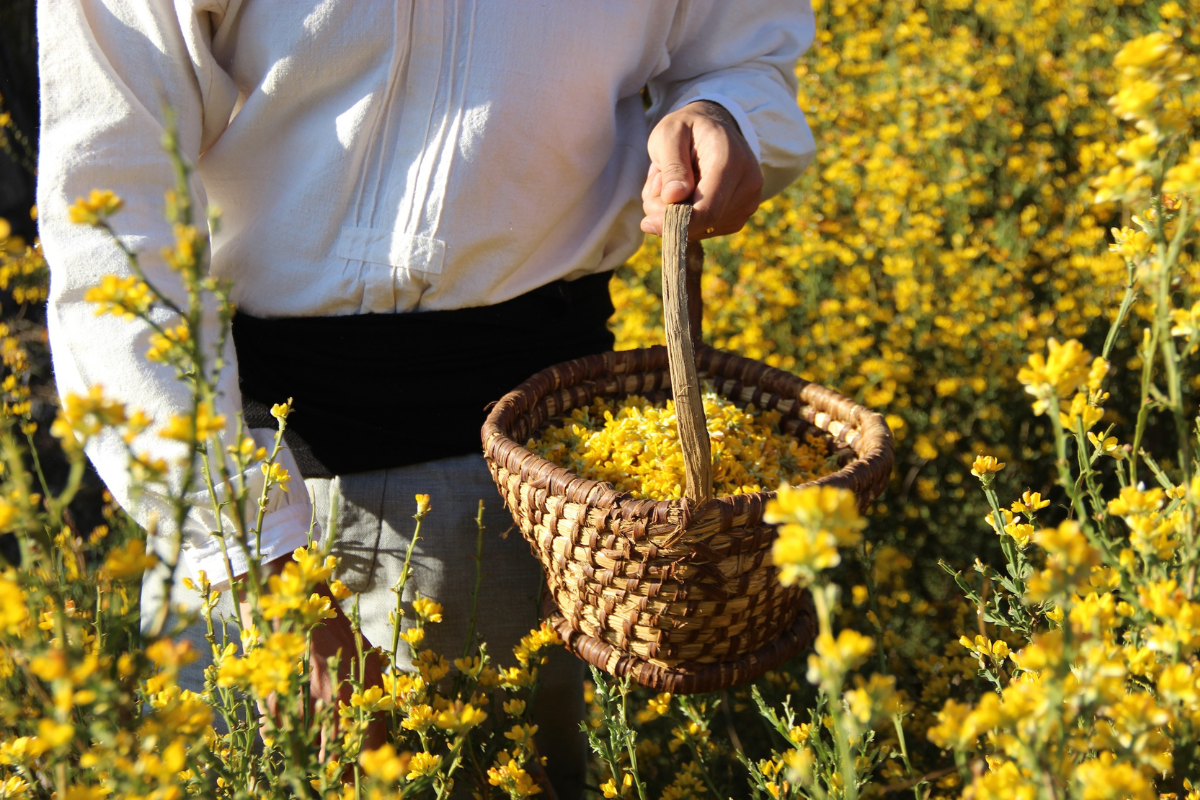
Following an invitation from the working group Várzea de Calde – Aldeia de Portugal, Binaural Nodar carried out ethnographic field research and creative development related to carqueja (prickly broom) in Várzea de Calde throughout the month of May. whose inhabitants were called “carquejeiros”, due to the profusion of this plant around the village, which was collected and transported to Viseu to be burned in the ovens that baked bread in some bakeries.
Carqueja is a low-growing plant that is highly resistant to fire, as it regenerates very quickly after burning. This plant has a well-known medicinal use as a diuretic and for treating stomach aches, with the flowers being used for infusions. It also has other diverse uses, such as fodder for livestock and for producing natural manure, to make brooms, to tan pig skins, as firewood for bread ovens, for the production of liqueur, sweets (carqueja cakes and aletria) and as a spice (carqueja rice).
The exhibition will consist of three complementary art installations: a photographic installation by Liliana Silva documenting all the uses of carqueja identified in the village of Várzea de Calde, a visual installation by Ana Margarida Ferreira, which uses carqueja itself and drawing as expressions of its textural and chromatic dimension and the passage of time, and finally a sound and video installation by Luís Costa, part of the author’s research in the context of the Doctoral Program in Artistic Creation (ID+ and LiDA research centers), which proposes linking carqueja to the idea of community (the hill as a common space) and inter-territorial relations (wild mountain plants as characteristics of the Iberian landscape).
ARTISTIC AND TECHNICAL INFORMATION:
Authorship: Ana Margarida Ferreira, Liliana Silva and Luís Costa
Editing: Ana Margarida Ferreira and Liliana Silva
Binaural Nodar is a organization supported by the Portuguese Republic – Culture | Directorate-General for the Arts.