
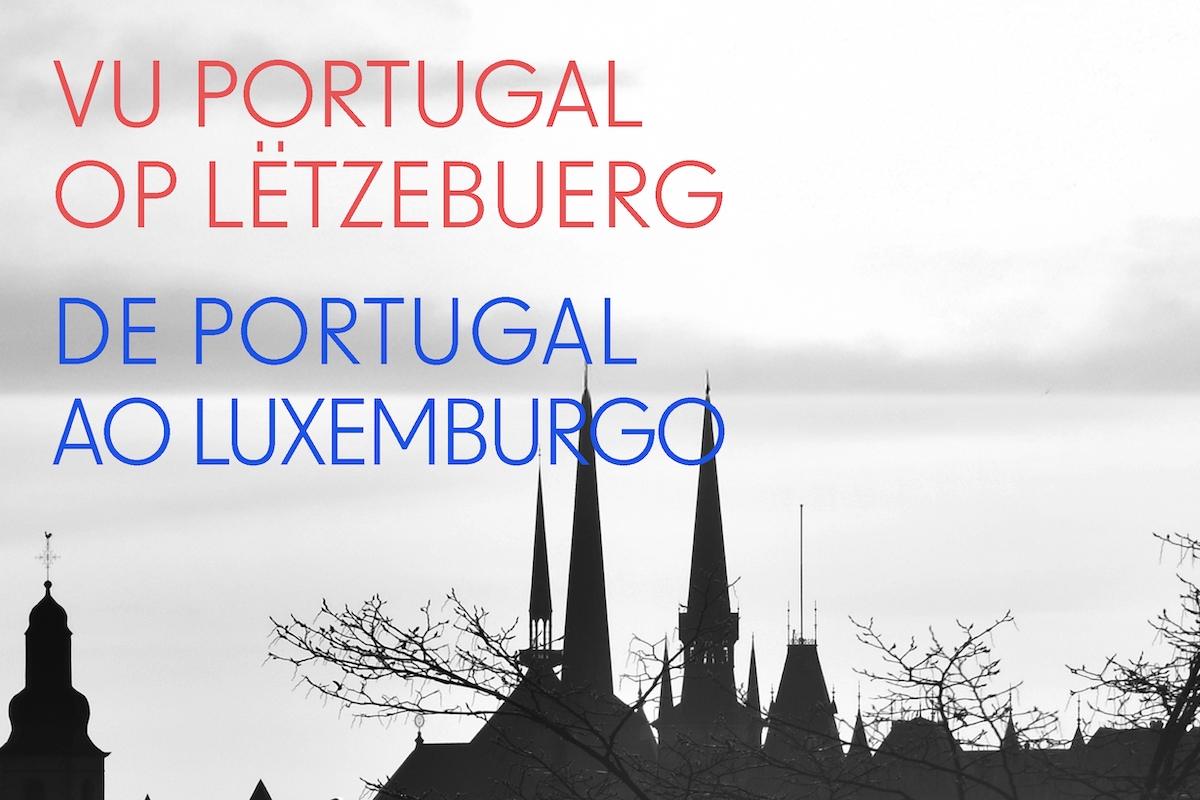
FROM PORTUGAL TO LUXEMBOURG
Paths of Emigration from Castro Daire
Community sessions on life and sensory memories
June 25th to 27th, 2025
Luxembourg Municipal Library
Esch-sur-Alzette Municipal Library
Dudelange Regional Public Library
The history of Portuguese emigration to Luxembourg dates back to the 1960s and 1970s, when many Portuguese, fleeing poverty and political instability, sought better living conditions abroad. Today, the Portuguese community is estimated to represent around 15% of Luxembourg’s population, corresponding to more than 90,000 people – one of the largest migrant groups in the country.
Among these emigrants are many from mountainous regions of Portugal, such as the Montemuro mountains in the municipality of Castro Daire, where socioeconomic difficulties and geographical isolation have driven the search for new opportunities across the border.
It is in this context that the project “From Portugal to Luxembourg. Paths of Emigration from Castro Daire” was born, promoted by the Municipality of Castro Daire, through its Municipal Library, by Binaural Nodar, as well as by the municipal libraries of the city of Luxembourg, Esch-sur-Alzette, and Dudelange.
This project is dedicated to collecting testimonies from former and current emigrants from the municipality of Castro Daire who have settled in Luxembourg. The project aims to collect, through audiovisual community sessions, life stories ranging from the professions they have held, to the memorable moments of their departure and arrival, to their vacation trips to Portugal, and so many other episodes that make up the daily life of migrants.
Special attention will be given to sensory experiences — such as sounds and music, images, landscapes, gastronomy, smells, etc. – that mark the intersection between memories of the homeland and experiences in the new host territory.
At the same time, the project includes the collection of photographs documenting the places and contexts of departure — such as scenes from childhood and youth in the villages of Castro Daire — as well as the new living spaces in Luxembourg: the home, the factory, the office, social gatherings among Portuguese people, trips to discover the host country, and temporary returns to the homeland. These images are not only historical documents; they are also emotional bridges between generations and geographies.
All the material collected will be rigorously edited, catalogued, and digitally archived, to be shared in the context of the Memória sobre Rodas (Memory on Wheels) project, developed by the Castro Daire Municipal Library and Binaural Nodar, as well as by partner libraries in Luxembourg. This sharing ensures the preservation and accessibility of this intangible heritage of emigration, allowing these stories to be known by communities in both countries.
The project will culminate in the publication, in 2026, of a trilingual book — in Luxembourgish, French, and Portuguese-bringing together testimonies, photographs, and QR codes for the interviews, which will consist of a joint edition by all the partners involved. This book will not only be a document, but also an invitation to intercultural dialogue, highlighting the richness of migrant experiences and the fundamental role of mountain communities, such as Castro Daire, in the fabric of Portuguese emigration to Luxembourg.
This project is part of the activities of the Tramontana Network, a European network dedicated to rural ethnography and the preservation, among other themes, of the memories of emigration and social change. The Tramontana Network brings together cultural associations from seven countries-Portugal, Spain, Italy, France, Albania, Romania, and Poland-and is co-financed by the Creative Europe program until 2027, promoting intercultural dialogue and the valorization of European intangible heritage.
Binaural Nodar is a organization supported by the Portuguese Republic – Culture | Directorate-General for the Arts.