
WHAT CAN RURAL PLACES SAY TO EACH OTHER?
Presentation of artistic research between Viseu Dão Lafões (Portugal) and Abruzzo (Italy)
March 1st, 9:00 p.m.
Bar Arjotvene, Penna Sant’Andrea (Abruzzo, Italy)
Author: Luís Costa
Introduction: Gianfranco Spitilli
Between November 2025 and February 2026, Luís Costa, coordinator of the Binaural Nodar association and PhD researcher in artistic creation, conducted several periods of artistic research in the mountain landscapes and communities of the Italian region of Abruzzo, in a co-production between Binaural Nodar, Bambun APS, and the Centro Studi Don Nicola Jobbi. This research is also part of the Tramontana network and is co-financed by the European Union’s Erasmus+ program.
In the context of the research, Luís Costa explored the empirical, sensory, and imaginary relationships between rural locations in the Portuguese region of Viseu Dão Lafões and the Italian region of Abruzzo, through a series of four new audiovisual essays that problematize the concept of the “third place.”
The third place presents itself as an evocative space that transcends conventional concepts of geography and landscape, offering a liminal terrain where meanings are neither fixed nor fully formed. This third place is not just a physical place, but a conceptual threshold, a meeting place where memory, perception, and desire converge and diverge. It requires engagement with the figure of the mediator, who proposes a creative latency where the act of imagining develops through a dynamic process of weaving disparate elements into a common transitory fabric.
With this research, carried out in collaboration with two Portuguese research centers: ID+ (University of Aveiro) and LiDA (School of Art and Design, Caldas da Rainha), the nine audiovisual essays included in Luís Costa’s doctoral research have been completed, reflecting various aspects of the relationship established between rural locations, such as popular religiosity, mountain flora, textile crafts, the relationship between humans and animals, irrigation systems, among others.
The supervisory team for Luis Costa’s doctoral research is composed of Prof. Graça Magalhães, Prof. Susana Duarte, and Prof. Sérgio Eliseu.
Works to be presented:
The Time of the Eternal Garden
Poggio delle Rose (TE), Italy, and Gafanhão (Castro Daire), Portugal
“O tempo da horta eterna” is an audiovisual journey through the intimacy of two family gardens, in Poggio delle Rose, Italy, and Além do Rio, Portugal. The project is a tribute to the farmer as a spontaneous artist who shapes forms, colors, and flavors, intertwining tradition and everyday life in a timeless dialogue between landscapes and cultures.
The Animals of Creation
Contrada Li Massimuccë (TE), Italy, and Raso (Castro Daire), Portugal
What gestures, paths, and words are used in the care of cattle in the stable of a small town in the province of Teramo and in extensive outdoor farming in a small Portuguese village with less than ten inhabitants?
The audiovisual work “The Animals of Creation” reflects both on daily habits and on the complex moral discussion about the life and destiny of farm animals and on the inherent dilemmas and contradictions, more or less assumed.
Tessitura
Campotosto (AQ), Italy, and Várzea de Calde (Viseu), Portugal
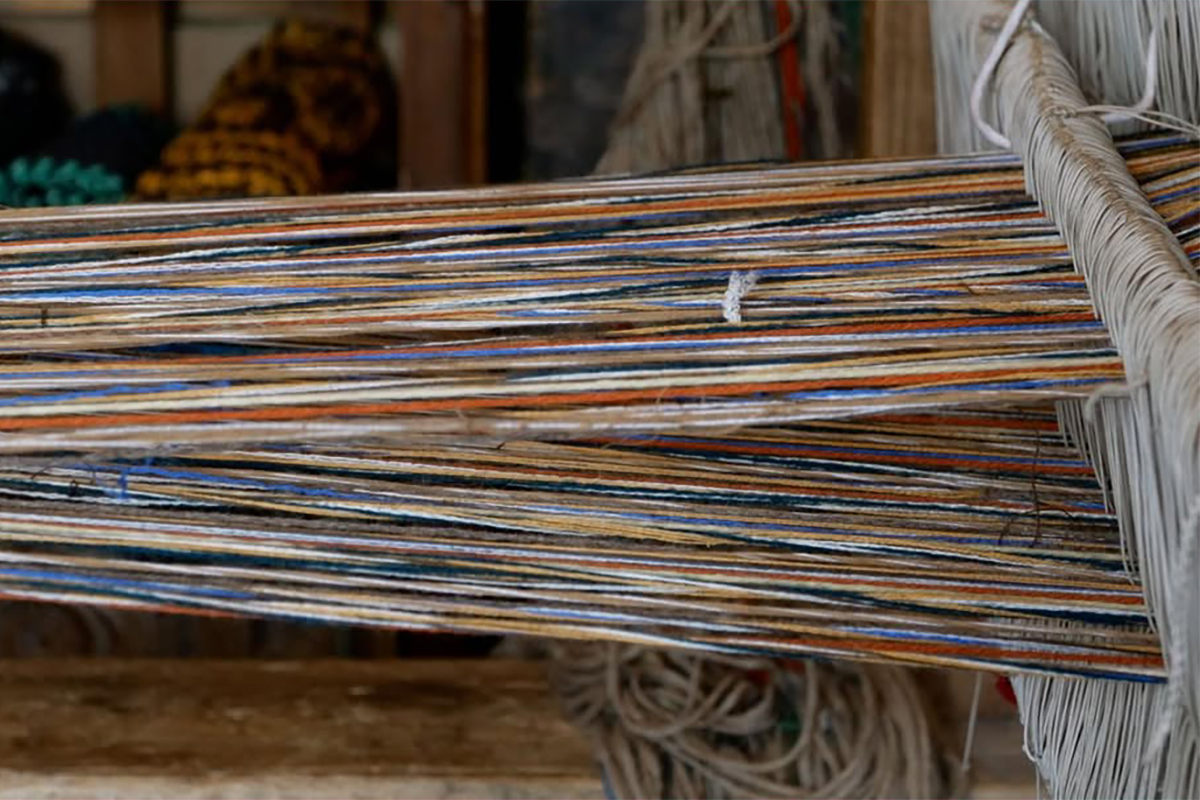
“Tessitura” is an audiovisual work that intertwines the art of weaving and artisanal textile production in two rural communities: Campotosto, in Abruzzo, Italy, and Várzea de Calde, in Viseu, Portugal. This artistic journey addresses ancient symbolisms of spinning and weaving, tracing an invisible thread that unites different cultures and eras, through reference to the Moirai of Greek mythology, the goddesses of destiny who spin, measure, and cut the thread of life, emphasizing the role of weaving as a metaphor for the human life cycle.
A Noite em Comum
Penna Sant’Andrea (TE), Italy, and Negrelos (São Pedro do Sul), Portugal
“A noite em comum” is an audiovisual project that addresses the sound traditions and rituals linked to winter songs in two distant places: Negrelos, São Pedro do Sul, in Portugal, and Penna Sant’Andrea, in Abruzzo, Italy. In the heart of winter, when the nights are coldest and longest, voices become the bearers of an ancient ritual. In the songs of Reis and Janeiras in Negrelos, as well as in the itinerant songs dedicated to Saint Anthony in Penna Sant’Andrea, sounds, voices, and lights emerge, breaking the nighttime silence and announcing or auguring hope to come.
Luís Costa would like to express his special thanks to all those who helped or were interviewed in the context of the field research for these four works: Gianfranco Spitilli, Domenico de Teodoro, Assunta Perilli, Augusto Fabri, Valentino Salini, Annunziata Buonasorte, Angelo Pavone, Giovina Canulli, Arlindo Pereira, and Cátia Silva.
Binaural Nodar is a cultural structure supported by the Portuguese Republic – Culture, Youth, and Sports | Directorate-General for the Arts.